Makeup That Works With Glasses: Definition Without Competing With Your Frames
Glasses do more than sit in front of makeup. Frames introduce color and geometry, lenses can enlarge or reduce the appearance of the eyes, and nose pads may disturb foundation by midday. A successful routine does not try to make the glasses disappear. It treats them as part of the face and adds definition where the frames change what is visible.
The useful adjustments are usually small: less base beneath pressure points, clearer brows, eye makeup scaled to the lenses, and color placed where it can still be seen.
Start With the Frames On
Look at the shape, thickness, and color of the frames before choosing makeup. Bold dark frames already provide contrast around the eyes and may need only restrained liner and mascara. Fine metal frames leave more room for shadow or a stronger lip. Warm tortoiseshell can relate naturally to bronze, olive, and muted rose, while cool frames may work easily with taupe, plum, charcoal, or berry.
These are starting observations, not restrictions. The goal is to see how much visual information is already present.
Keep the Nose Area Thin
Foundation tends to move where glasses touch the bridge and sides of the nose. Heavy layers make the movement more obvious. Apply skincare and sunscreen, allow them to settle, then use minimal base around contact points. Conceal only where necessary.
Press a small amount of powder onto the bridge with a puff and dust the nose pads or bridge of the glasses with a clean tissue before wearing them. Too much powder creates buildup rather than grip. If marks appear later, lift the glasses, blot, and smooth the edge with a fingertip instead of adding more foundation immediately.
Give Brows a Clear but Natural Shape
Frames draw attention to brows, particularly when their top line follows the brow shape. Brush hairs into place and fill gaps with fine strokes. The brow does not need to match the frame’s intensity exactly; it only needs enough definition not to disappear behind it.
Avoid extending the tail based solely on what is visible through the lens. Take the glasses off, check the full shape, then put them back on to assess the relationship.
Adjust Eye Makeup for the Lens Effect
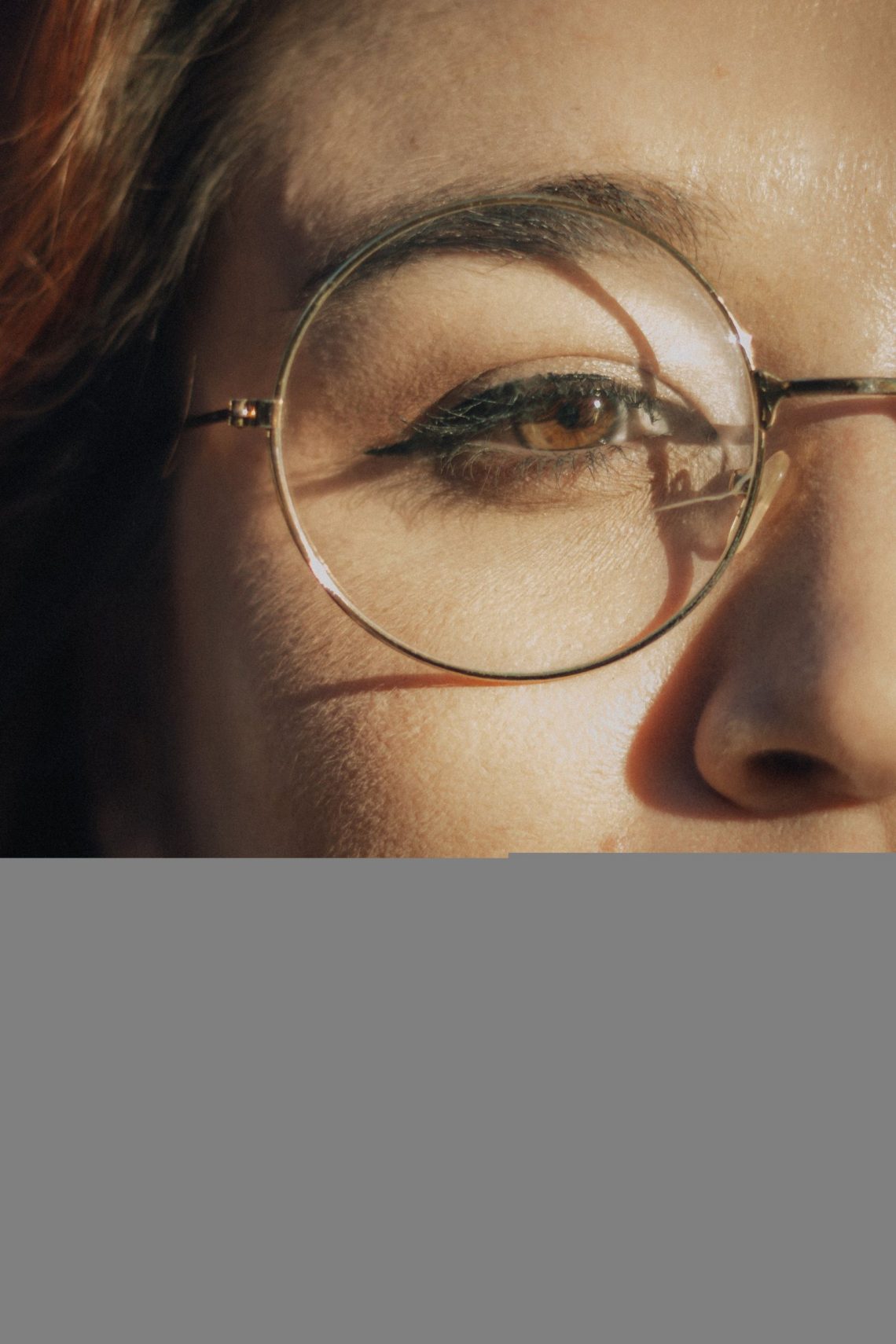
Lenses for farsightedness can make the eyes appear larger and magnify uneven liner or clumped mascara. Use thin layers, blend edges carefully, and separate lashes. A softly defined lash line may look cleaner than a thick one.
Lenses for nearsightedness can make the eyes appear smaller. Lighter shadow on the mobile lid, curled lashes, and liner kept close to the roots can restore definition without surrounding the eye in darkness. A pale neutral pencil at the lower waterline may brighten the look if it is comfortable and suitable for eye use.
Place Shadow Where the Frames Leave Space
Apply makeup while alternating between glasses on and off. A beautiful gradient hidden behind a thick upper rim may not contribute much. Move the visible interest slightly above the crease or toward the outer corner, depending on frame shape.
One or two shadows are often enough. Use a mid-tone through the crease and a deeper shade close to the lashes. Satin on the lid catches light behind lenses, while a fully glittered surface may reflect more than expected. Test the result in daylight and in photographs, where lens reflections can alter it again.
Prevent Mascara From Meeting the Lenses
Curling lashes can direct them upward rather than forward. Concentrate mascara at the roots and use a lighter hand on the tips. Lengthening formulas may cause more contact than a defining or volumizing formula, depending on your lashes and how close the frames sit.
Allow mascara to dry before putting glasses on. If marks continue, use less product on the longest center lashes or ask an optician whether the frame fit can be adjusted; makeup should not compensate for glasses that sit incorrectly.
Decide Between Cheek and Lip Emphasis
Frames occupy the upper face, so cheek and lip color can restore balance. Place blush while wearing the glasses to avoid hiding it behind the lower rim. A slightly outward placement often connects the cheeks to the temples without crowding the center.
A defined lip works especially well with simple eye makeup. It need not be bright: rosewood, berry balm, warm nude, or soft red can anchor the lower face. If the frames are colorful, repeat a related undertone rather than trying to find an exact match.
Keep the Glasses Themselves Clean
Smudged lenses dull even carefully applied makeup. Use the cleaning method recommended for the lens coating, and wipe the bridge and nose pads regularly. Makeup residue on the frames can transfer back to the skin and make slipping worse.
Do not use strong household cleaners or rough fabric on coated lenses. A clean microfiber cloth and the appropriate solution protect both vision and the appearance of the frames.
Check the Finished Face From Normal Distance
Close-up mirrors are useful for liner but poor for judging balance. Put on the glasses, step back, and look at the whole face. If one element dominates, remove or soften something before adding more elsewhere.
Makeup with glasses is not a special set of rigid rules. It is a matter of placement, scale, and wear. Thin coverage at contact points, deliberate brows, eye definition suited to the lenses, and visible cheek or lip color create a face that feels complete—with the frames included rather than treated as an interruption.